

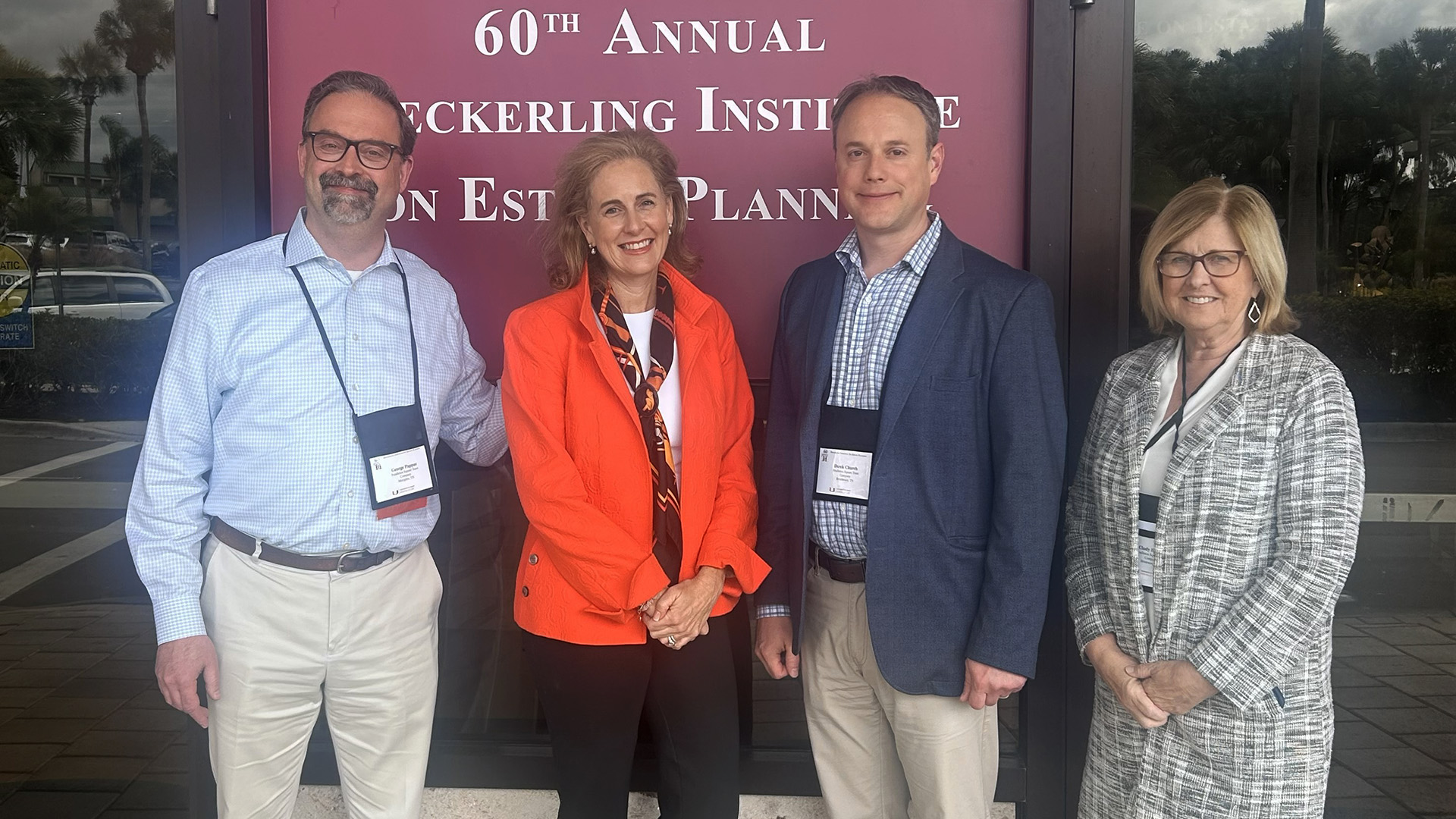
The 60th Annual Heckerling Institute on Estate Planning convened in Orlando in January with over 4,000 attendees, offering a full week of updates on state trust laws, fiduciary litigation, federal tax laws and estate planning structures for families and the professionals advising them.
Below are four themes discussed at this year’s Institute that we expect to impact planning discussions in 2026 and beyond.
1. Changes Under OB3: Trust Income Tax Planning Becomes More Critical
The “One Big Beautiful Bill Act” (OB3) dramatically alters how trusts experience income taxation. Notably, the Section 68 “2/37-haircut” now applies to trusts, reducing itemized deductions in most cases. And because the haircut affects the deduction for distributed trust income, there is now a possibility for double taxation when the income is distributed to beneficiaries. Many presenters indicated a technical correction could address these issues and several professional organizations are alerting the House Ways and Means Committee to the issue. OB3 also brings: •Adjusted rules for charitable deductions, including new floors and carryover mechanics.•State and local tax (SALT) deduction changes, adding more complexity to planning.•A significantly enhanced Qualified Small Business Stok (QSBS) landscape, with shorterholding-period tiers and increased exclusion limits — though additional regulatory guidance isexpected.
Pendleton Square’s Takeaway: Clients should have their legal and tax advisors analyze their trust structures to determine if modifications are appropriate considering changes to the deductibility of certain expenses and income distributions. For founders and early-stage investors, revisit QSBS documentation to ensure compliance and review existing entities for new opportunities, particularly before future regulations could narrow or eliminate these planning benefits.
2. SLATs in a Post-TCJA World: A Powerful Tool with Real-World Risks
Spousal Lifetime Access Trusts (SLATs) remain popular, but several sessions warned that divorce, poor drafting, or mis-timed creation or administration can trigger unintended income and estate tax consequences. Key risk areas highlighted at Heckerling:
THE 2026 HECKERLING INSTITUTE ON ESTATE PLANNING: KEY TAKEAWAYS
•Divorce-trigger design: Consider drafting the trust agreement to treat the spouse aspredeceased on filing divorce papers or including a provision to toggle the trust to non-grantorstatus by using an adverse-party consent requirement on trust distributions to the (ex-)spousebeneficiary.
•Tax reimbursement clauses: These must be incorporated at inception; adding later can betreated as a taxable gift by the IRS.
•Reciprocal trusts: Two SLATs (one for each spouse) should be meaningfully different inways such as timing, terms, and beneficiaries to avoid IRS scrutiny.
•Ethical landmines: Joint representation of spouses remains challenging; in certain states,ethics rules may require counsel to withdraw if one spouse provides a confidential disclosure.
Pendleton Square’s Takeaway: SLATs can be great planning vehicles, but care should be taken in drafting.
3. Competition Among States is Resulting in More Interesting Trust Structures
One of the most talked-about themes: the advancement of trust laws in certain states allowing grantors more flexibility in establishing or modifying trust structures. These laws generally allow for modified fiduciary liability, silent-trust structures, long dynasty trusts, and trust-director regimes facilitating bifurcated trustee structures. Some speakers raised concerns around deviating from the traditional trust model, which we note is often favored by banks that elect to maintain all discretion and responsibility over fiduciary activities. States highlighted included Delaware, Nevada, South Dakota and Tennessee. It was also noted that these states don’t have a state income tax affecting trusts (except for Delaware, which taxes trusts in limited cases), and generally make at least annual changes (or, what we view as “improvements”) to their state trust laws. These states have all seen an inflow of trust assets over recent years to local professional and corporate trustees.
Pendleton Square’s Position: The United States is currently experiencing the largest intergenerational wealth transfer in history, with more trusts being created than even before. Many of these trusts are being established by entrepreneurs and other business owners who want to be creative in their planning after considering their assets being transferred, the impact of taxes, and family dynamics, among other factors. In such situations, strong directed trust structures in low-tax jurisdictions and modified requirements for beneficiary reporting may be appropriate. States like Tennessee have simply responded to calls in the planning community and modernized their trust laws to help families of wealth build and maintain multi-generational legacies.
4.Retirement Accounts After SECURE: More Flexibility, More Pitfalls
It was emphasized that the SECURE Act’s rules remain misunderstood, particularly for trusts receiving retirement accounts. Conduit-trust mechanics, reformation deadlines, and the IRD deduction can significantly impact planning outcomes. Important points: •Trusts with multiple beneficiaries may inadvertently default to a 10-year payout rule forinherited retirement accounts, unless reformed into conduit trusts by the beneficiary finalizationdate (BFD), which is September 30 of the year after death of the retirement account owner.•Certain other post-death trust modifications are respected retroactively if completed by theBFD.•An IRA owner who has designated their spouse as beneficiary is advised to consider updatingthe designation if the beneficiary spouse pre-deceases them, otherwise the IRA has a 5-yearpayout on the owner’s death.•The IRD deduction remains under-used and can meaningfully reduce income taxes oninherited retirement accounts for the recipient.
Pendleton Square’s Takeaway: For larger retirement accounts, create a post-death retirement account action plan for fiduciaries and beneficiaries. Missing a reformation or documentation deadline can cost families meaningful tax benefits.
The information provided in this blog post is for general informational purposes only and does not constitute tax, legal, or other professional advice.